• I spent most of my life searching for a spiritual path that I could feel and see the truth in. One that was me, not one I was told to believe or threatened with hell if I didn’t. One that I could feel the truth of with every fiber of my being.

    Christianity never did to me. And yet, I could still see the beauty in it, at least in the Catholic church. I could step into a Catholic service and feel something deep and moving in the reverence, the ritual, and the sense of awe there. I never found that kind of beauty in the tiny, ultra-conservative Church of Christ I grew up in or in the Baptist churches I would attend with my wife.

    So I kept searching.

    That search took me down a lot of roads. Christianity in different forms, Judaism, Asatru and heathenry, ideas close to Native American spiritualities, humanism, neo-paganism. I wasn’t just curious. I was looking for something real. Something that felt like home.

    About twenty years ago, I found that home in Buddhism. But even then, I couldn’t fully live it. Alcoholism and addiction kept pulling me away. I drifted in and out, touching something true, then losing it again. And then came withdrawal.

    When I came off benzodiazepines after more than twenty years of high-dose use, everything stripped down to survival. I was literally just trying to survive day to day. There was no room left for abstract ideas. No room for philosophy. No patience for distant promises or concepts of help that lived somewhere “out there.” I needed something immediate, something real, and something that could meet me right here, right now.

    There’s no adequate way to explain what benzo withdrawal does to a person. Not really. You can try, but unless someone has lived it, they won’t ever fully understand. It was hell. Not metaphorically. Not poetically. It was hell in the most literal, embodied sense. My mind, body, and my nervous system, everything was breaking and trying to rebuild at the same time.

    It hurt in a way that words just don’t describe. I remember someone telling me recently that the fact I came out the other side alive, after that long at those doses, was remarkable. That hit me hard. Not in a proud way. In a sobering, sort of frightening way.

    Because when I look back on it I realize how close it all came. Doctors told me I couldn’t do it.
     Pharmacists told me I couldn’t do it. One pharmacist I trusted, someone I had known for years, looked me straight in the eye and said, “You’ll never be free of benzos now. Your nervous system depends on them just to function.”

    But I did it anyway. And it hurt me more than I can ever explain. Even now, my body is still learning how to exist without them. I still have waves that come and go. Days, sometimes weeks, where things feel off. My heart still reminds me, with those runs of PVCs, that healing isn’t always linear.

    Sometimes it hits me just how enormous that was, getting through it. And I still don’t completely understand how I did. I’ve talked to so many people in recovery who struggled deeply after shorter use and lower doses. By all logic, I shouldn’t have made it through the way I did.

    But I did.

    And in that experience where everything was stripped away, Buddhism wasn’t an abstract philosophy anymore. It was something I could do, something I could feel. Something I could hold onto. It was something that met me in the exact moment I was in. It helped keep me here. It helped keep me alive.

    After going through something like that, things shift. I don’t have anger anymore toward people who try to convert me to their beliefs. But I don’t have room for it either. During withdrawal, when I was suffering the most, there were people who tried, more than once, to convert me. I think they meant well. I think they saw the pain I was in and believed their path could magically fix it. But suffering like that teaches you something very clearly, what helps… helps. And what doesn’t… doesn’t.

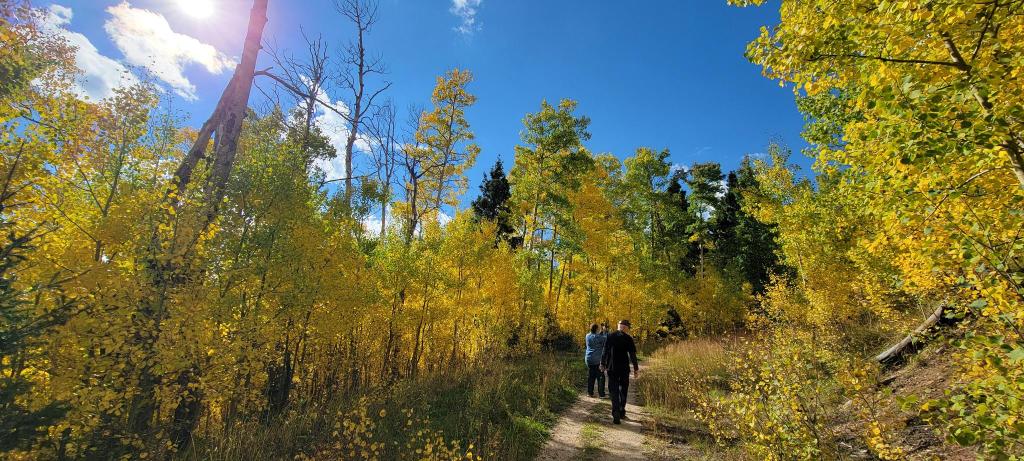
    These days I live a lot more quietly now. More simply. I tend my bonsai trees, I chant “namo Amituofo”,  I meditate. I spend time with my wife. I read. I write. I practice Qigong. I walk. I breathe fresh air and enjoy the mountains.

    I take care of this life that I’ve been given back. And I love it! I love the freedom from substances. I love not trying to outrun or numb my past anymore. I love building a life that doesn’t revolve around escape or substances. I love the peace I’ve found.

    There’s only one thing I sometimes wish… that I had found this sooner. But that’s not how it works. Maybe the road I took, as long and painful as it was, is the only reason I can feel this peace now the way I do now. And maybe that means I’m exactly where I’m supposed to be now.

    Amituofo
    ~Buck
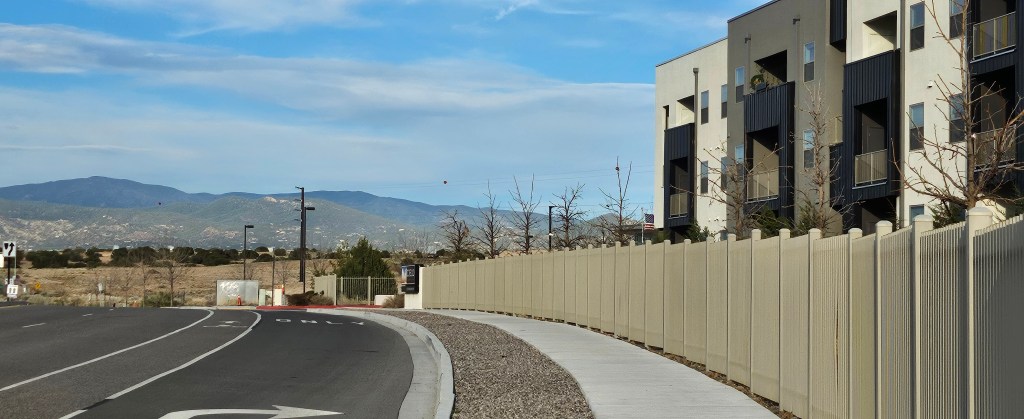
  • Yesterday we spent the entire day driving. Not just driving to get somewhere, but driving to look. Exploring areas in Rio Rancho and Bernalillo, thinking about where we might be moving to in the coming months. New roads, new neighborhoods, and new views.

    There’s something sorta weird about that kind of day. You’re not quite here anymore, but you’re not there yet either. Just somewhere… in between.

    By the time we got home, I was exhausted. Not just physically, though there’s plenty of that too. But that deeper kind of tired that comes from taking in so much at one time…so many sights, so many potential decisions, so many “what ifs.” It leaves you feeling a little off balance and a little un-tethered.

    I’ve noticed something about times like this. The mind wants to rush ahead, it wants to figure everything out right now. Things like where exactly will we live? Will it be right? Will this be a good move? What if it isn’t?

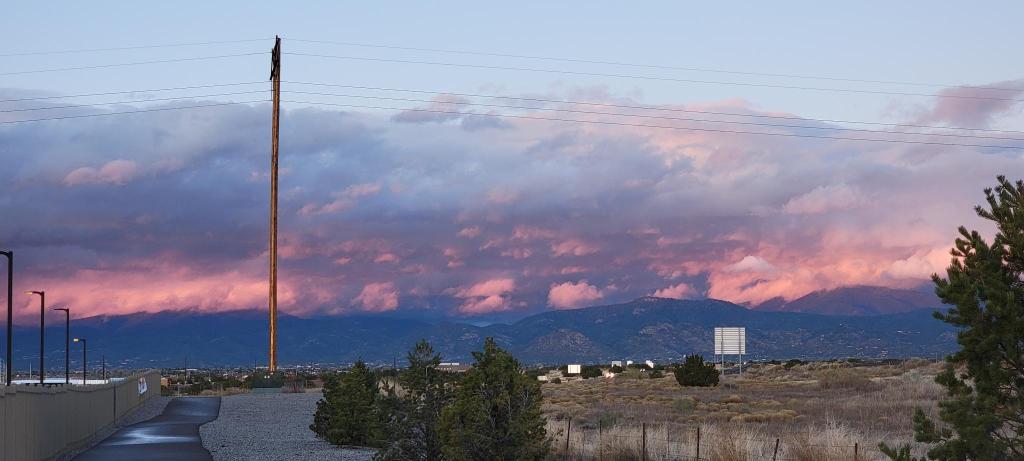
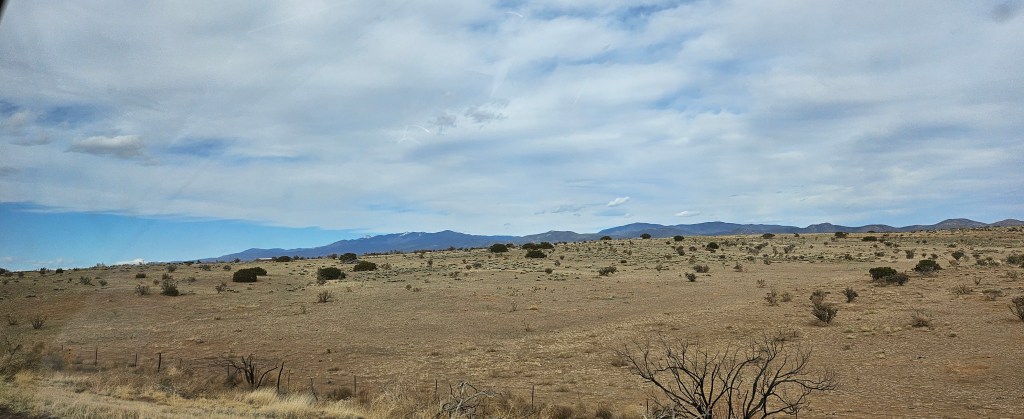
    It tries to find somewhere solid before life has actually brought you there. But yesterday in the middle of all that, I caught myself. We were driving, and I looked out at the land and mountains stretching out under the beautiful New Mexico sky. The kind of sky that always feels bigger than whatever is going on inside your head. And something in me just sort of eased up.

    Nothing was decided yet and nothing was certain. But in that one moment, nothing needed to be. Lately, through my own practices, whether it’s walking with my beads or sitting quietly in zazen the evening, I’ve been learning something I never understood for most of my life. You don’t have to “arrive” before you arrive.

    It sounds simple, but it’s not always easy. Especially for someone like me, who spent so many years either running from the past or trying to control the future. It’s the peace that only shows up when you stop trying to be somewhere else. Even if “somewhere else” looks better at the moment. Even if it might be better.

    Peace doesn’t live in the future. It shows up right here… or not at all. So last night, I tried something different. I let the questions be there without chasing them, without trying to force an answer. I let the uncertainty sit and settle without trying to resolve it. I just stayed with what was right in front of me.

    And for a little while, that was enough. We may be moving soon. Or maybe not. Life will unfold the way it does. That’s just the way things work. But yesterday reminded me of something important, there is a space between “here” and “there” that we spend a lot of our lives in. And if we’re not careful, we miss the present completely, because we’re too busy trying to get out of it.

    Last night I was tired. But not a bad kind of tired. It was the kind of tired that comes from living a full day, even if it didn’t come with all the answers. Maybe not every day is meant to give us crystal clarity. Some days just show us where we are right now.

    Amituofo
    ~Buck

  • Is there ever such a thing as a “holy war”? Personally, I think not. Ever.

    Yet there seems to be a growing “chorus”, particularly among some Evangelicals,suggesting otherwise. There are even reports of military leaders framing the war with Iran in explicitly religious terms, as if it were somehow tied to bringing about the Parousia, the second coming of Christ. I have to be honest, I can’t wrap my head around that.

    Part of it is because the idea itself feels unhinged to me. But beyond that, it doesn’t even align with the Bible they claim to follow. According to Jesus himself, no one knows the time of that event, not even him, “but only the Father” (Matthew 24:36, Mark 13:32). So where does this confidence come from? Certainly not from scripture.

    When it comes to moral justification for war, the Catholic tradition offers what is known as Just War Theory. Even within that framework, the standards are strict… war must be a last resort, it must be proportional, and it must not create greater evil than it seeks to eliminate. By those standards, this current war falls far short. Even senior Catholic voices, including military clergy, have said as much, questioning whether it meets those criteria at all. And Pope Leo himself has been clear, God is not on the side of those who wage war, and invoking Christ to justify violence is a distortion of the faith.

    Buddhism goes even further than that. There is no “just war” doctrine to debate. The teaching is simple and direct… ahimsa, non-violence. It’s not optional. It’s not flexible. It is foundational.

    And this is not unique to one tradition. Across the world’s major faiths, the message is consistent… violence is something to be restrained, not glorified. Something to be mourned, not sanctified. And yet here we are.

    A minority, loud, influential, and in some cases holding real power is calling this war not only “just,” but “holy.” That word should make us all concerned. Because once a war is called “holy,” it becomes immune to criticism. It becomes unquestionable. And history has shown us, again and again, how dangerous that is.

    This president campaigned as a bringer of peace. Promised no new wars. Warned that others would lead us into conflict. And yet now, our sons and daughters are once again being sent into it. The contradiction speaks for itself. Not only that, but this president in his second presidency has launched military attacks against 7 countries (Somalia, Iraq, Yemen, Syria, Nigeria, Venezuela, and Iran) and he’s only been in office 15 months this time.

    As I write this, an American airman is missing after being shot down. Somewhere, a family is waiting and hoping, fearing, not knowing. That is the reality of war. Not rhetoric. Not slogans. Not theology. Reality. And in this case, completely unnecessary. And that is where I struggle.

    Because while that family waits, life continues as if nothing is wrong. Speeches are given. Appearances are made. The machinery of power keeps moving. And I find it difficult,very difficult, not to let anger take over when I think about that contrast. This president is throwing parties and golfing while people are dying.

    If you’ve read my writing before, you know I don’t usually step into political territory. I don’t enjoy it. I don’t seek it out. But this doesn’t feel political to me. It feels moral. There are times when silence becomes its own kind of statement. And for me, this is not a moment for silence.

    I know this will upset some people. Especially those who believe this war, or this administration, should not be questioned at all. But I can’t reconcile silence with conscience. Not on this. If I believe in compassion, if I believe in non-violence, if I believe in the value of human life… then I cannot call this anything close to “holy.”

    Amituofo
    ~Buck

  • My wife recently suggested the idea for this post. We were out driving, just exploring, no real destination, just letting the road take us where it would. At one point, we passed a turnoff and wondered where it led. She said, “Well, all roads lead somewhere.”

    It was a cool comment, and I liked it. Not just as a practical truth, but like something deeper. Because it’s true. Every road does lead somewhere. Every choice, every step, every turn whether we realize it or not takes us somewhere. And along the way we touch the lives of others, for better or worse, just like they touch ours.

    Something we used to talk about a lot when we were dating, 39 years ago now, was fate. She believed in it completely but I didn’t back then. Back then, I thought everything was just chance. Coincidence. Random intersections of lives and circumstances. But life has a way of humbling certainty like that.

    There have been moments, people I’ve met, events that happened in ways I simply cannot explain away as coincidence. Not honestly anyway. At some point, “chance” starts to feel like too small a word or thing to explain these things. Some people call it fate, some call it God’s will, and some call it synchronicity.

    I’m not overly concerned with the label anymore. I just know that something deeper seems to be at work in the paths we all walk. Our lives take us down very different roads. Some people seem to know exactly where they’re going from an early age. They have a sense of direction in them, a clarity. They set a course and then follow it.

    I wasn’t like that. I lived for the day. Full speed ahead like I’ve written about before, foot on the accelerator, hands not even on the wheel. I didn’t have a clear direction, and really, I think a lot of that goes back to early trauma. It shaped how I moved through the world, even when I didn’t understand it.

    And living that way it seems almost inevitable that I met the people I did. Others moving just as fast, just as hard, and just as lost as I was. My wife on the other hand walked a very different road. She had a sense of direction. A plan. She knew what she wanted and moved toward it with intention. If we had met just a few years earlier, or a few years later, I don’t think she would have wanted anything to do with me.

    We met during a very specific window in my life. A time when I was being trained and mentored by the Korean Tae Kwon Do master I’ve written about before. The man who helped me step away from drugs and alcohol and begin living in a healthier way.

    That window didn’t last forever though. After he went back to Korea, I slowly lost my way again. But in that specific stretch of time our paths crossed at exactly the right time. And that’s hard for me to call anything other than fate.

    I think the same is true of recovery. I would never have met the incredible people I know today if I hadn’t been through addiction. The addiction isn’t something I’m grateful for, the addiction itself brought a lot of pain, but I am deeply grateful for recovery. And for the people.

    The honesty, the strength, and the compassion, the shared understanding that doesn’t need to be explained in any way. Those are roads I never would have found any other way.

    So yes, life takes us down many roads. Some are really harsh and unforgiving. Some are smooth and beautiful. Also there are some roads we choose and some roads seem to choose us. But all of them lead somewhere, just like my wife said that day. And somehow along the way they lead us to each other.

    I’m grateful for the road I’m on now. I’m grateful for where it’s taken me, even the parts I didn’t understand at the time. And more than anything, I’m grateful that I get to walk this road with my wife. Ich liebe dich, mein Liebling!

    I hope that wherever road you’re on now is a smooth and beautiful one!

    Amituofo
    ~Buck

  • I don’t know if everyone has this experience with social media, but I’ve definitely been seeing more of it lately. Posts, especially on Facebook, that start with “Breaking News” in big, bold letters. I almost always click the “x” to hide them. Supposedly it helps tailor your feed. Maybe it does, maybe it doesn’t. Either way, I don’t want to see it.

    Because it’s almost never actually news. It’s nonsense. Political noise, outrage, half truths, or just plain nonsense dressed up to look urgent. And it’s exhausting.

    I mostly keep Facebook around for one reason… family. I have people I care about living hundreds of miles away, and without it, I probably wouldn’t hear from them nearly as often. So I check in, see what they’ve shared, maybe post a link to something I’ve written and that’s about it.

    Everything else feels like poison. No matter how carefully I try to curate what I see, following family, recovery pages, and a few things that actually uplift, there’s always something that slips through. Something loud and angry. Something designed to pull you in and get a reaction from you. And here lately I just don’t have it in me.

    I haven’t been sleeping well for over a week now. Last night was worse than most. I woke up in the early hours with my heart doing its old familiar thing, those PVC runs that don’t necessarily hurt, but are impossible to ignore. After that, sleep wasn’t coming back.

    So today I’m running on empty. And when you feel like that, when your body is tired and your mind is worn thin, your perspective changes. Or maybe it clarifies. It just feels like too much And something in me just says, “I don’t care.” Not in a cold or indifferent way and not in a “nothing matters” way. Just in a “I’ve had enough” sort of way.

    I don’t care about outrage that’s manufactured to try to get me hooked or scrolling. What I do care about is family, recovery and getting through the day with some measure of peace. I don’t care about anything wrapped in the words “Breaking News”. For me, the healthiest thing I can do when I see those things is just say what I’m saying today, “I don’t care about this.”

    Amituofo
    ~Buck

    Photo Credit: My son, Ty Britt

  • The body remembers things even when the mind forgets. Every trauma specialist knows this. I think addiction specialists know it too, because trauma and addiction go hand in hand. I’ve never met an addict who didn’t carry some form of trauma, and addiction itself becomes its own kind of trauma. But here’s a cool story that happened to me that really drives home the fact of just how powerfully the body remembers stuff.

    I really appreciate Traditional Chinese Medicine (TCM). It’s helped me through some difficult stuff. Acupuncture, especially, has been really effective for me. I’m careful with any herbs or remedies because of my heart medication, but everything else like Tai Chi, Qigong, and acupuncture I’m definitely open to. So, I went in for another session.

    She began by checking what she called my “energy.” I don’t claim to understand how it works. She had me sit and stand in different positions, checked my pulse in different places, and even waved a small vial of something over parts of my body. I know how that sounds. I know it can sound like “woo”, but please bear with me here, it gets interesting.

    After a few minutes of this she told me I wasn’t releasing some old trauma. That comment stopped me cold, it really kinda hit me hard. She asked if something had been bothering me more than usual. I said, “Not really,” just because I didn’t want to go there. But she wasn’t giving up that easy and said she was seeing signs of what she called Qi stagnation. Basically, emotional energy that isn’t moving, that gets “stuck” in the body.

    And she was right. Something had been bothering me. A lot. I just didn’t want to talk about it, not there, and not then because I knew it would break open my guard and I’d start crying. So instead of moving straight to acupuncture, she said she wanted to start with cupping. I’d never had it done before, but she wasn’t charging extra, so I agreed.

    She put a small flame inside each glass cup before putting them on my body. Then she stepped out of the room for a few minutes. It didn’t take long until a strong wave of uneasiness came over me. That unease turned into a full-blown panic attack. And with it came a flood of memories. The ones I used to use alcohol and benzo to keep buried.

    By the time she came back in, I was a mess. She saw I was having a panic attack and she started tapping really hard on the middle of my upper lip. Hard enough that I turned my head away because it hurt and I said, “Just give me a minute.”

    I focused my mind and adjusted my breathing and chanted “Namo Amituofo” over and over. I was able to get myself under control that way pretty fast. She looked at me and asked, “How did you do that?” “With my mind,” I said. She smiled and said, “That’s impressive! If you can do that, you can do anything.”

    What she meant was stopping a panic attack in the middle of it. But what struck me more was how suddenly the panic attack had come on in the first place. She explained that the cupping may have released “blockages,” letting the stagnant Qi to start moving again, not in a bad way, but in a releasing way. I don’t make any claim to understand that. I just know what I felt and what happened.

    After that, we continued with acupuncture. It turned into a long session, and she gave me some practices to help with the emotional side of things. To keep Qi flowing naturally.

    When I got home, I was exhausted, but lighter. A lot lighter. The whole thing reminded me of something my primary care doctor said not long ago. He said,  “I don’t know what it is about trauma at a young age, but it really does cause problems in the body years later.”

    So the body definitely remembers. That part isn’t “woo” at all. Trauma specialists know it. Doctors know it. People who live with it definitely know it. We may not completely understand how it works or why certain experiences seem to get “stored” in the body, but the effects are definitely real.

    You don’t have to have deep trauma to see it. Think about stress. Ever notice how it settles into your shoulders, neck, and your head? That tightness and the tension headache. That’s the same thing just on a smaller scale.

    There’s clearly more going on in the relationship between body, mind, and spirit than we fully understand. Whether you put it in terms of nervous system responses, or Qi, or something else… there’s something there.

    Because sometimes, when something finally shifts or releases, it really shifts. I still don’t fully understand what happened in that session, but I know this… my body remembered something I had tried to bury and forget. And in that office during that session, my body made me feel it.

    Have you ever experienced anything like that?

    Amituofo
    ~Buck

  • There is a quote attributed to Abraham Lincoln that says, “I care not for a man’s religion whose dog and cat are not the better for it.” I’ve always loved that quote because it reveals something simple but profound… if what we believe doesn’t make us kinder, then what good is it?

    To me, it points to two important truths, kindness, even in the smallest things, and the danger of what I can only call empty religion. By “empty,” I mean a kind of belief that is spoken aloud but never truly lived. It’s lip service without real inner change.

    I see religion and spirituality as related, but not the same. They can overlap, but too often they don’t. Religion, as I understand it, is often a system of required beliefs, sometimes held together by fear. “Believe this, or face consequences. Follow these rules, or be judged.”

    Spirituality, when it is real and deeply experienced, works differently. It changes a person from the inside out. It softens what was once hard. It opens what was once closed. It naturally leads toward kindness, compassion, empathy, and truthfulness. Not because those things are commanded, but because they become unavoidable, they arise naturally as a result. Religion can exist without real transformation. But true spirituality cannot.

    If there is no increase in compassion, no increase in kindness, no deepening of honesty, then something is missing. Spirituality is not threatened by questions. It doesn’t fear or punish doubt. It doesn’t need to silence others in order to survive. It welcomes inquiry. It listens. It grows. And it does not call for violence.

    This has been weighing heavily on my mind because of things I’ve seen recently. Government officials publicly praying for “overwhelming violence.” Pastors openly praying for the death of political opponents. These aren’t hypothetical situations. They are happening right in front of our eyes, and they should concern all of us.

    Those who claim Christianity while praying for harm or death are not reflecting the teachings of Jesus. I don’t have to be a Christian to recognize that something has gone wrong when violence is justified in Jesus’ name.

    War is not something to be glorified. Violence is not something to be celebrated. And it should never be wrapped in the language of faith.

    I was raised in the Church of Christ. I’ve attended Baptist churches with my wife. Later, before I stopped going to church altogether and became honest with myself about what I truly believe, I attended Mass at a Catholic church weekly. So I’m not unfamiliar with Christian teachings, nor with the misunderstandings that often exist between different traditions.

    I’ve also spent time in recovery communities, where I saw something important lived out in real time. People there speak of a “higher power” or a “God of your understanding.” That language exists for a reason. For many of us, the word “God” carries pain, memories of fear, control, or even rejection. Recovery groups understand this. They remove dogma and threats, because people who are struggling don’t need to be coerced, they need to be supported.

    And in those groups, I’ve seen something real… people changing. Becoming more honest. More compassionate. More willing to face themselves and grow. That is what spirituality looks like to me.

    The reason I am speaking about this now is because I believe deeply in the idea that for harmful things to continue, good people often only need to remain silent. I have tried to be careful in writing this, to keep in mind the Buddhist teachings regarding speech… is it true, is it beneficial, and is it necessary?

    My intent is not to offend, but I am no longer willing to stay silent in the face of what I believe is harmful and wrong.

    If spirituality means anything at all, it has to show up in how we treat one another. Even people who disagree with us.

    Amituofo
    ~Buck

  • What could possibly happen on a walk? More than I could have ever imagined before. That’s for sure.

    I’ve increased the time and length of my daily walks and just being outdoors more in general. It’s easier this time of year because Spring is finally starting to show itself here in Santa Fe, and the days are stretching out a little longer. But what really keeps drawing me back out there is how different each walk feels even on the same trail. And, how much better I feel after these walks.

    As I’ve written about before, I begin my walks using my fozhu (Buddhist meditation beads) while chanting. It’s a kind of walking meditation. After that, I shift into another form of walking meditation, matching the rhythm of my steps with my breath. And then, after that… I just walk.

    I take in the mountains, the ravens, the clean, pine-scented air. If something has been weighing heavy on my mind, I let myself look at it, but a lot differently than I used to. These days, if there’s a clear solution that comes to me, then it’s no longer a problem. And if there isn’t, I try to let it go instead of carrying it around all day worrying about it. Either way, it’s no longer a problem for me any more.

    That didn’t come naturally to me. It’s something I had to work at. For a long time, I held onto everything. I replayed things over and over, worried about things, turned them over and over in my mind until they became heavier than they needed to be. Letting go of things has made more difference than I expected. Walking has helped with this.

    Out on the trail, I also find myself watching the animals. Especially the ravens. They’ve become some of  my favorite companions out there. It’s hard to watch them and not feel like there’s something more going on than simple “instinct” like many of my generation were taught animals had. More and more, even science is starting to point in that direction, talking about things like awareness and even a theory of mind (TOM). In other words, they experience an inner world too. They are definitely sentient and aware and make decisions. They also play and have fun. 

    And honestly, when you lock eyes with one, it doesn’t feel like you’re looking at something empty. It feels like something is looking back. And that’s because there is something looking back at you. These creatures are self-aware. Not mindless “biological scenery” as some of us were taught.

    Whatever we call it, instinct, awareness, consciousness, they don’t  spend their time worrying about things they can’t change. There’s something instructive in that. Much can be learned from nature if we just open ourselves to it.

    I meet people out there sometimes too. Not in the hurried, distracted way we tend to meet people in everyday life, but in a slower, actually present kind of way. Most of us are out there for similar reasons, to breathe, to move, to step outside of the noise of everyday life for a while.

    I’ve been trying to live more intentionally. To bring the mindfulness I practice in meditation to my whole day, in everything I do. To cultivate a sense of peace, to keep learning, to move through the world with more care and awareness. Because I know what the other way felt like. How I viewed the world during active alcoholism and addiction.

    Addiction took a lot from me, and not just from me. It affected the lives of people I care about too. So now, in whatever ways I can, I try to move in a different direction. Toward something steadier and with more compassion.

    One thing I’ve come to see is that peace isn’t something that can be forced onto others like some people think it can be. Real peace doesn’t need to argue or convince or convert. It doesn’t raise its voice. When it’s there, it just… is.

    These walks are simple. There’s nothing complicated about them. And that’s exactly why they are so effective. That’s exactly why they are so healing and so powerful. There’s nothing forced. It makes me think of the Daoist concept of wu wei, which can be translated as “effortless effort” or getting into the “flow state”. You aren’t fighting or forcing anything, and that’s where real healing can begin.

    We’re all out there, people, animals, all of us, moving through our own inner worlds while sharing the same outer one. And if you slow down enough, like really slow down, something definitely shifts. Step by step, breath by breath, the mind settles down.

    And with that settling down, that’s when things start to open up. You notice more. You feel more. You realize how much has been here all along. The trees, the birds, the wind. The occasional stranger on the trail. Even yourself. Fully and completely here. Your mind not wandering to the past and not imagining a future, just right here right now.

    It’s a kind of miracle. A walk can be a lot of things.

    I know life gets busy. I know not everyone can get out on a trail. But maybe it doesn’t have to look a certain way. Maybe it’s just a few minutes outside. Or sitting by an open window. Or just pausing long enough to notice your own breathing.

    Whatever form it takes, the important part might just be this… being here, fully and completely for a little while. If you get the chance try it. It’s been a game changer for me in my recovery.

    Amituofo
    ~Buck

  • Every morning I have a cup of hot Earl Grey tea. Some people have to have their coffee, I have to have my tea. I feel completely “off” if I don’t have that cup of tea. It’s not just the warmth or the caffeine, though the caffeine is definitely a factor. It’s the time and the space of it. The “ritual” of it.

    I’ve never been a morning person in my whole life, but this gives me a small window at the start of each day. A quiet moment to settle in before everything begins. It’s small things like this that bring me a sense of peace. A sense of continuity. It doesn’t have to be tea or coffee, and it doesn’t have to be in the morning. Just something that gives you a little space, time to slow down, even if just for a few minutes.

    My wife has her own version of this. She has a Dr. Pepper. She loves needlework, cross-stitching and embroidery. It helps her unwind, and the things she creates are beautiful. I have my bonsai trees. I write. We both love to read. Things like this give us time to breathe and enjoy our lives. It helps us to de-stress.

    These are simple things. Quiet things. But they matter more than I ever would have understood before, especially during active alcoholism and/or addiction. Because during active alcoholism and addiction, none of that existed for me.

    I woke up every day feeling awful, either hungover or already needing something (benzos) just to feel like what I thought was “normal”. My first thoughts every day weren’t peaceful or reflective. They were about survival. Do I have enough pills? How am I going to get more? What’s my backup plan if I can’t get more pills?

    That’s what addiction does. It takes over everything. Every thought, every plan, every moment. It replaces any sense of peace with constant pressure. There’s nothing restful about it. Nothing steady. Nothing calm.

    So now, I don’t take these quiet moments for granted. Not even a little bit.

    I’ve come a long way, but it didn’t happen all at once. There wasn’t some single turning point where everything suddenly became peaceful. It came in small pieces and small changes. Small choices like a cup of tea. A quiet morning. My daily walks. A moment of gratitude and prayer before I get out of bed.

    Taken individually, these things might not seem like much. I know that if someone had suggested them to me back then, I would have dismissed them. They would have seemed too small to matter at all. But they do matter…

    Because that’s how peace begins to happen, not all at once, but in moments. Brief, almost unnoticeable moments where, for a little while, everything feels OK. Over time, those moments start to add up.

    They don’t erase the past and they don’t magically fix everything. But they create something new. Something steady and something real.

    They become reminders. Reminders that life doesn’t have to feel the way it once did. Reminders that peace and recovery is possible. Reminders that I don’t have to rush into the day anymore.

    I can sit and I can breathe. And I can have my tea.

    Amituofo
    ~Buck

  • Until recently, when I looked back on my life, I did so with regret. A lot of regret. Regret for things I said and did in my younger years, especially during active alcoholism and addiction. It felt like my life was a fast, loud car with my foot pressed all the way down on the accelerator but my hands weren’t on the steering wheel. It didn’t even have a steering wheel.

    And predictably, maybe even inevitably, that car eventually became so damaged, so utterly wrecked, that it just wouldn’t function anymore. Not at that speed and not in that condition. It didn’t just wreck itself. It wrecked everything in its path along the way.

    I took that car to different “mechanics” and “body shops,” trying to get it running again. But over and over, I was told the same thing… That kind of damage doesn’t get repaired. There’s no real hope for something like that. Of course, the “car” was my life. And the damage was everything addiction and alcoholism left behind.

    Even after I got sober and clean, the regret didn’t go away. In some ways, it got worse. It became something internal, something extremely corrosive. It started to eat away at any sense of self-worth I had left or tried to rebuild. At some point, I realized I had to let that go too. Just like I let alcohol and benzos go. Because that level of regret is toxic.

    People who haven’t walked through addiction, trauma, and recovery may not fully understand that weight. But those who have, they know. Recovery isn’t just about putting substances down.
     It’s also about what’s happening inside of us.

    At least for me, there was no real recovery without an internal change. An internal shift. I couldn’t keep thinking the same thoughts, living the same way, or surrounding myself with the same patterns and people, and expect something different to happen.

    That car analogy is powerful for me because it felt true.

    There was a time I really did feel like I was trapped in something powerful and out of control… full throttle and no steering wheel. And I felt every crash. Every impact. And there were a lot of them.

    The “mechanics” and “body shops” in my life came in different forms, doctors, religious voices, authority figures.

    Doctors told me I would never be free from benzos. Not after that high of a daily dose, not after that many years. The best I could hope for, they said, was to reduce the amount I took. The risks were too high. No one wanted to be responsible for what might happen.

    I also remember a Baptist preacher my mother-in-law sent to talk to me. At one point, he stood up, frustrated, and walked out of the house saying, “I think you are ruined on Christianity.” In other words, yet again, no hope.

    What he probably didn’t realize is that moment became a turning point for me. Not out of anger, but clarity. His words were the proverbial final nail in the coffin of my relationship with Christianity. I had already struggled for a long time with those teachings, and after that, I finally allowed myself to be honest… I just didn’t believe them.

    But I did know something else was there, because even in the depths of addiction, that spiritual longing never left me. What I found, what truly resonated with me, was Buddhism. It’s what I believe with every fiber of my being. And it has played an essential role in saving my life.

    Looking back now, I’m grateful I didn’t accept those final verdicts about my life.

    Because if I had… I probably wouldn’t be here writing this. I wouldn’t have made it to my 60th birthday. And I definitely wouldn’t be experiencing the kind of peace and happiness I have today.

    That “car”, my life, is in better shape now than it has ever been. Not because it was never damaged. But because it was rebuilt. It has a steering wheel now. And for the first time, I’m actually driving it.

    If there’s one thing I’ve learned, it’s this… Be careful who you hand your keys to.

    Even people in positions of authority can be wrong. Sometimes they’re speaking from limitation, not truth. Sometimes they just can’t see what’s possible for you. That doesn’t make them bad people. But it does mean you don’t have to accept their conclusions as your future.

    Nobody knows your life, the condition of your “car”, better than you do. So take care of it. Be patient with it and don’t give up on it. Even if it’s been through a lot. Especially if it’s been through a lot.

    Amituofo
    ~Buck