• How do you describe how badly something hurt you?

    How do you put into words something that didn’t just wound you, but rearranged your life and your body from the inside out?

    I’ve tried, over and over, to describe what benzodiazepine withdrawal does to a human being. I can give people pieces of it. I can give outlines. But the full weight of it? That resists language.

    Try to imagine this… everything you believed about yourself, your strength, your stability, your sense of being “you” is ripped away, not by trauma from outside, but by something happening inside your own nervous system. Now imagine that happening while your physical health begins to unravel at the same time. Blood work that was once normal is suddenly abnormal. Diabetes that was under control is no longer stable. Your heart develops rhythm disturbances. Blood test markers light up as if you have a raging infection, even though there is none, because your body is under so much stress it believes it is being attacked.

    For me, this isn’t imagination. This is what I lived through. And what I am still healing from.

    If I had truly known what withdrawal was going to do to me, I don’t think I would have chosen this path. But once I reached a certain point, there was no safe way back. There was only forward. That is the brutal truth of benzodiazepine withdrawal. At some point, it becomes a matter of survival, not choice.

    In my support group, one man did not survive. It became too much for him. I hope he has found the peace that he could not find in life. Several others had to go back on the drug because their bodies simply could not withstand the withdrawal. I don’t see them as weak. I tried many times myself before I was finally able to keep going. No one who has not lived inside this understands how narrow the path can become.

    Even my own doctor did not think I would successfully get off this drug. I did, but at a steep cost. In three days, I will be one year free from benzodiazepines, and I am still dealing with what they did to my nervous system, my heart, and my body as a whole.

    This experience is not the same as my past alcoholism. That may surprise some people, but it’s true. When I was drinking, I was making destructive choices, terrible ones, and alcohol made it easier to keep making them. With benzodiazepines, I was never in control of what was happening to my body or brain. I was never warned of the risks. I was never told that stopping could be dangerous or even deadly. You cannot simply “quit” benzodiazepines. Abrupt discontinuation or rapid tapering can cause seizures, heart rhythm disturbances, psychosis, and death. I personally experienced seizures during withdrawal.

    Today I live with what is called Benzodiazepine-Induced Neurological Dysfunction and autonomic nervous system disruption. No one can tell me how long this will last, only that it can take years. “Long-term use” is often defined as more than two to four weeks. I was on these drugs for over twenty years.

    To anyone reading this who is still taking benzodiazepines or who is in withdrawal… I am not trying to frighten you. But I will not lie to you. Too many people have been harmed by silence and minimization. If you want to understand how severe this can be, even for highly trained physicians, you can read the story of a cardiologist who went through this herself here.

    So how do I live now?

    I take life one day at a time. I don’t plan far into the future yet. My nervous system is still learning what safety feels like. I anchor myself in my family. In love. In simple moments. I pray. I meditate. I savor beauty. These aren’t small things. This is how I build a life after what I have endured.

    And I will keep telling this story.

    Not because I want to dwell in suffering or some such nonsense, but because too many people are being placed on these drugs without informed consent, and too many are being abandoned when they try to come off them. I am here. Others are not. And if my voice can help even one person feel less alone, or one doctor think twice, or one family understand what their loved one is going through, then this pain will not have been meaningless.

    I have walked through the fire to get here.
    I survived.

    And as long as I am here, I will speak.

    Amituofo
     ~Buck

  • A couple of evenings ago,
    after a day and night of snowfall,
    we went out for food at one of our favorite places.
    When we came back outside,
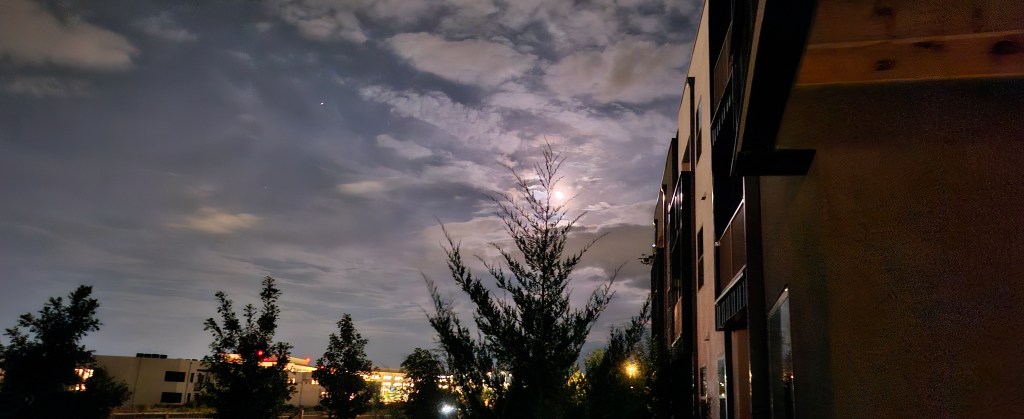
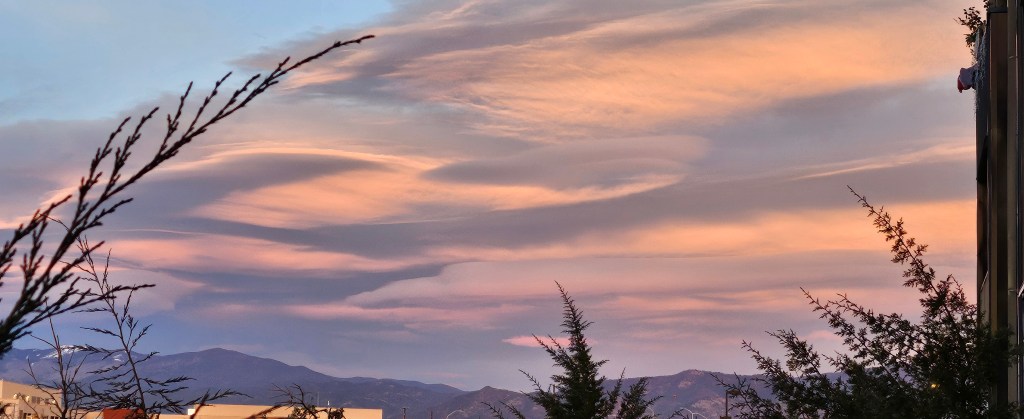
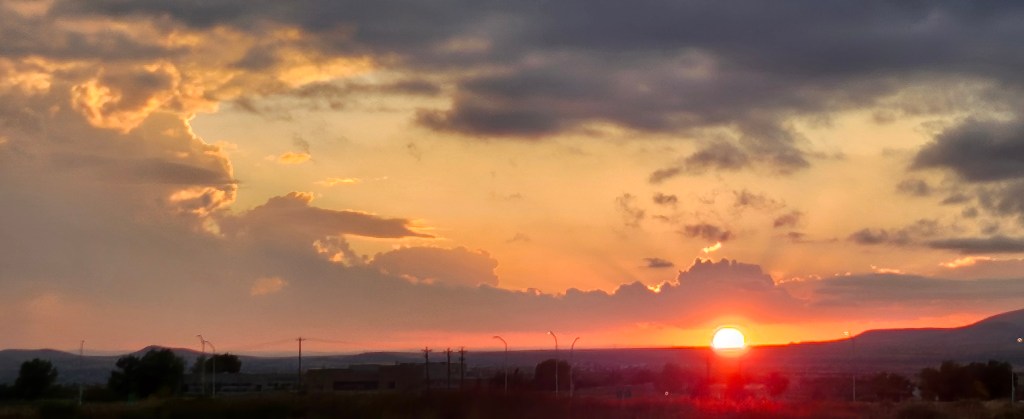
    the sky looked like it had caught fire.

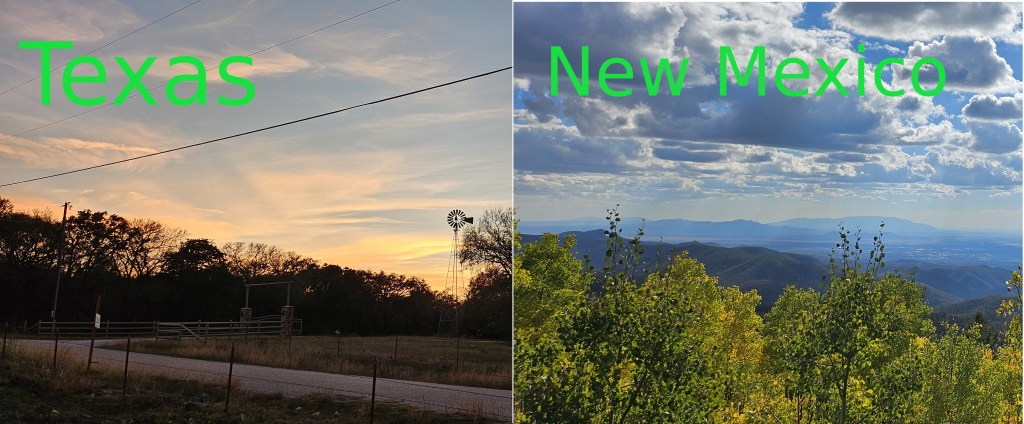
    New Mexico sunsets are always beautiful,
    but this one felt… alive.
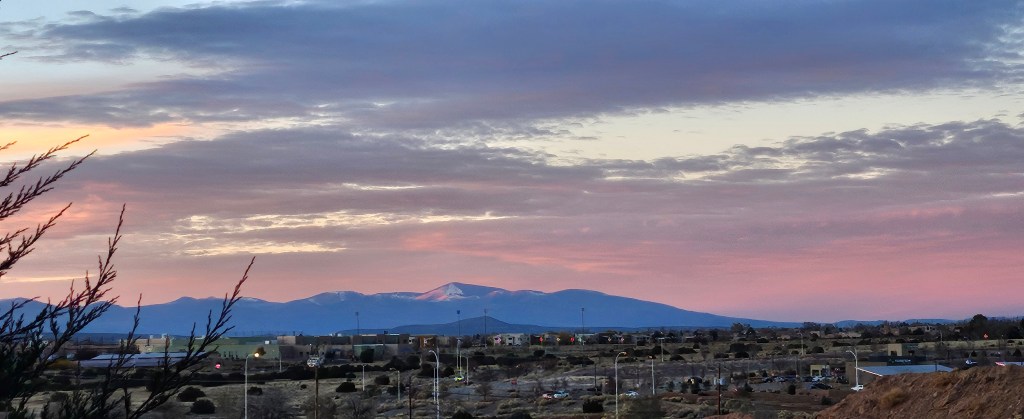
    Pink and gold poured across the clouds,
    as if the mountains themselves were breathing light.
    I took pictures, of course,
    but photos can never capture what the moment really was.
    They never hold the way beauty enters the chest
    and quietly breaks you open.

    These days, that kind of beauty brings me to tears.
    After everything my body and mind endured in withdrawal,
    I feel moments like this with a tenderness
    I never knew before.
    Life no longer feels endless or disposable.
    It feels fragile.
    Sacred.
    Here, now, and not guaranteed.

    And it reminded me, again,
    how much place matters when we are trying to heal.

    I tried to get off benzos many times in Texas.
    Again and again I failed,
    ending up back in my doctor’s office,
    the dose raised,
    the fog thickened.
    The environment wasn’t wrong in some moral way,
    it just wasn’t right for me.
    The land, the pressure, the fear,
    the silence around who I really was…
    my nervous system couldn’t find rest there.

    Here, in New Mexico,
    something in me finally exhaled in relief.
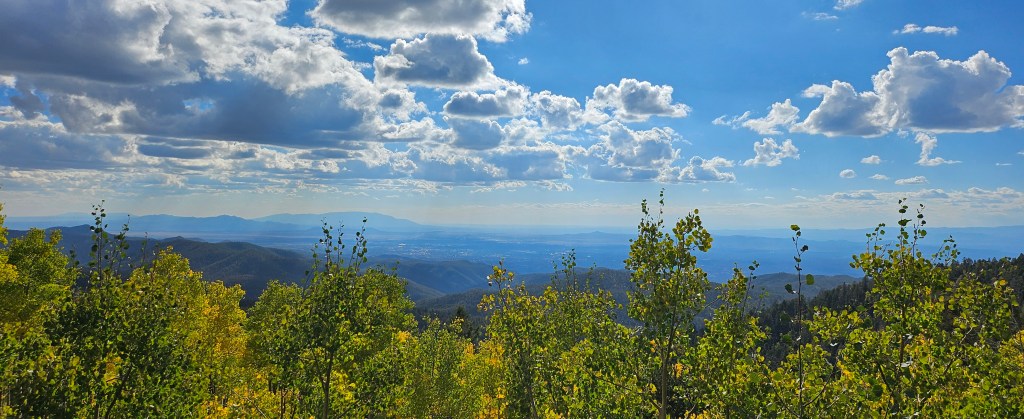
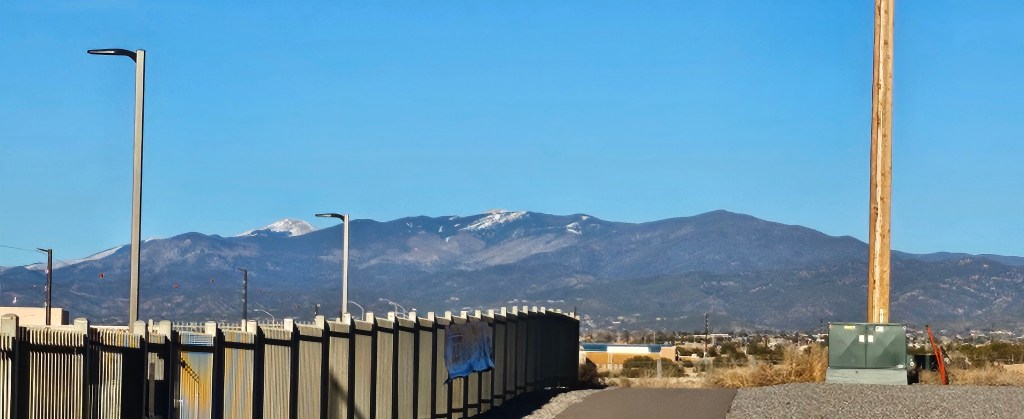
    The mountains.
    The sky.
    The sacredness of this wide, open land.
    And most of all,
    the love and steadiness of my family.
    Everything aligned in a way it never had before
    and healing became possible for the first time.

    Five days from now,
    it will be one full year since my last pill.
    One year free.

    Even in the most beautiful place I’ve ever known,
    getting off benzos was the hardest thing I’ve ever done.
    But now I am here,
    awake inside my own life.
    No chemical fog.
    No muffled emotions.
    No false calm.
    And no anger.

    I feel things now.
    Really feel them.
    Joy.
    Fear.
    Grief.
    Wonder.

    And for the first time in my life,
    I am honest with myself about what I feel.
    I no longer tell myself “I don’t care”
    when something hurts or scares me.
    I care deeply.
    And that honesty,
    that simple, clear truth,
    has changed everything.

    It has also changed how I live with my past.
    I am finally able to look at what was done to me.
    And what I did to others.
    Not to punish myself
    but to heal.
    Alcohol once helped me bury it.
    Later, eight Klonopin a day helped me forget it.
    But you can’t heal what you have hidden and numbed.
    You can only heal what you are willing to look at and feel.

    And one of the deepest truths I had to face
    was what I truly believe.

    For decades, living in the “Buckle of the Bible Belt”,
    I learned to stay quiet about my own spiritual heart.
    To keep it hidden.
    To survive.
    I didn’t know how many others were doing the same
    until I left.
    Until I began to speak my truth.

    Being silenced, especially about something so intimate,
    slowly erodes a person’s soul.
    It makes you feel small,
    judged,
    alone.

    Now, I am free not just from substances,
    but free from pretending.
    Free to be genuine.
    Free to believe what I believe.
    Free to be myself without apology.

    That freedom has made me gentler.
    Kinder.
    More real.

    And it is why I keep writing.

    I write because it heals me.

    And because sometimes, quietly,
    someone reaches out to say,
    “I thought I was alone.
    But your words found me.”

    For those healing from addiction,
    I see you.
    For those who feel silenced for who they are or what they believe,
    I see you.

    Keep walking.
    Even if it means changing everything.
    Even if it means leaving a place behind.
    Peace is possible.

    I am living proof.

    May you find peace.
    May you heal.

    Amituofo
     ~ Buck

  • One of the many things I’ve noticed about myself since coming off benzodiazepines is how sensitive my heart has become, not just physically, but emotionally as well. Information, strong emotions, even what I read or witness online can now have a very real impact on my body.

    I’ve written before about how benzo withdrawal has caused multifocal PVCs for me, irregular heartbeats that can come in long runs, sometimes lasting twenty minutes or more. To say these episodes are frightening would be an understatement. The fear they trigger is primal, the kind that tells your body something is terribly wrong. Even when they aren’t happening, the anticipation of the next episode is exhausting.

    Sometimes there is a clear trigger. Other times there isn’t, they just happen. For me, one of the strongest triggers is strong emotion.

    For more than twenty years, while I was on benzodiazepines, I lived with a level of anger I couldn’t explain. At times it turned into outright rage. Trying to describe what it’s like to live that way would require an entirely separate post, so I won’t attempt it here. What I will say is this, since coming off the medication, that anger is gone. Completely. I still get upset, I’m human, but the deep, consuming anger and rage are no longer a part of my life.

    Because of this sensitivity, I now have to be very careful about what I take in, especially the news. Sometimes avoiding it is nearly impossible. The events themselves are distressing enough, but what troubles me even more are the reactions I see from people. Some are obvious trolls, often not even living in this country. But others are ordinary people, people whose hearts seem to have grown so cold that they mock and ridicule the pain and suffering of others based solely on political identity.

    I’ll be sixty years old in a couple of months, and I have never seen people so divided or so casually cruel to one another. Like everyone else, I have my own views. But I do not wish harm on those who disagree with me, nor do I ridicule them or their families when they are hurting. I may be naive, but I cannot understand the desire to add more pain to an already heavy world. It genuinely breaks my heart.

    This is why I mentioned my heart condition and why I limit my exposure to the news when I can. When I encounter pervasive hatred and dehumanization, it affects me deeply. Deeply enough to trigger runs of PVCs in my heart. These episodes aren’t just frightening. Over time, heavy PVC burdens can stress the heart, and certain arrhythmias can become dangerous.

    Because of that, mindfulness and spiritual practice are no longer optional for me. They aren’t something I turn to only in moments of crisis. Spirituality, by its very nature, is a practice, something cultivated daily, so that when hardship arises, it’s already rooted within us. Not forced. Not superficial. Already alive.

    For me, this isn’t lofty idealism. It’s survival. After what withdrawal did to my nervous system and my heart, I simply cannot afford to live in anger, hatred, or constant emotional agitation. I lived that way for too long.

    As Thich Nhat Hanh taught so often, those who cause great suffering are themselves deeply suffering. The seeds of anger, fear, and hatred in their minds have been watered until they’ve crowded out compassion and peace. In my own life, I’ve never known a person grounded in love and inner peace who intentionally caused harm to others. Those who did were almost always consumed by anger themselves.

    Anger has never overcome anger, not once in human history. I wish more of us could see that. I also wish I had understood it sooner.

    It is my belief that if people truly practiced the values they profess, religious or otherwise, the world would be safer and kinder. Those without religious beliefs are not excluded. Practices like meditation have been shown to calm the mind and cultivate compassion, even among people who once committed serious acts of violence. Change is possible. Violence isn’t only physical, it can be verbal and emotional as well.

    The world, and this country, feel increasingly tense and hostile. My heart can no longer carry that weight. So I do the only three things I can… I limit what I take in, I practice my spirituality, and I offer peace where I’m able. I fail sometimes. When I do, I begin again.

    That is all any of us can do.

    I wish you peace.
    May we all tend carefully to the seeds of compassion that already live within us.

    Amituofo
     ~ Buck

  • In the past, I made New Year’s resolutions and almost always failed at them. Looking back, it’s clear why… most of them were unrealistic and disconnected from the realities of my life at the time. Eventually, I stopped making resolutions altogether.

    This year is different.

    This year, I’ve made resolutions I know I can keep because they’re rooted in reality, not ambition. I kept them simple and focused on health, well-being, and how I live each day.

    Last year, during benzodiazepine withdrawal, I wasn’t working toward goals or self-improvement. I was in survival mode. Literally taking life one day, sometimes one minute, at a time. It took everything I had just to endure. There was no room for lofty goals beyond one essential task… keep going to survive.

    Living through that ordeal brought absolute clarity about what truly matters to me. Family. Health. Spiritual practice. Not status, not wealth, not possessions. Now that I’m clear-headed and free of substances, I understand, more deeply than ever, what makes for a good life.

    One of my resolutions this year is to live my faith more fully and more honestly. That commitment was tested recently when I saw Buddhist monks being protested online during their peace walk across the United States. I had to focus and remind myself not to become angry and say bad things to those people saying bad things about the monks and their peace walk.

    After more than a year of intense inner work and healing, I’ve come to understand something important… peace is not passive. It’s not a slogan or a banner waved at others. Peace is something we actively cultivate within ourselves so that we don’t add more hostility to an already wounded world.

    So I’m reflecting inward. Can I meet disapproval with grace? Can I offer goodwill without expecting it in return? This is my practice now.

    This year, I choose to protect my inner peace not by building walls between faiths or people, but by dissolving barriers with kindness. I choose to meet fear with calm, judgment with peace, and division with a quiet heart. I choose to honor the sacred in all sincere paths, even when they differ from my own.

    Withdrawal taught me things about myself I never wanted to learn, but am grateful to know. I learned that I have a strength I didn’t realize I had. There were moments when survival was not a metaphor, it was literal. There was only one option and that was to keep going.

    Once I reached a certain point, there was no turning back. Returning to the drug risked kindling, and I had already experienced seizures. Giving up was not an option. I had to keep walking forward, one step at a time.

    When I say my family and my faith carried me through, it is no exaggeration. I know I couldn’t have done it without either. Because of that, I feel a responsibility now, not just to live in peace, but to offer peace where I can.

    For me, that means learning not to fall back into my old, reactionary patterns. When someone offends me or ridicules my beliefs, I’m practicing pausing before responding. Meeting rudeness with rudeness only destroys my own peace and adds to the suffering already present.

    There’s a story in the Buddhist tradition where an angry man insults the Buddha, questioning him and calling him names. The Buddha responds calmly by asking, “If you buy a gift for someone and they don’t accept it, to whom does the gift belong?”

    The man answers, “It belongs to me, because I bought it.”

    The Buddha smiles and says, “Exactly. It is the same with your anger. If you offer it to me and I do not accept it, it remains with you.”

    That is one of the teachings I’m practicing now.

    I’m clear-headed enough to know that I don’t have to respond to every provocation, online or in person. I can’t change the world, but I can make my small corner of it more peaceful.

    Wherever you are, and whatever you’re going through, I wish you good health, steadiness, and peace.

    Amituofo
     ~Buck

  • This is a response to some of the messages I’ve received regarding my last post.

    I didn’t write that post to offend anyone. It was written to reflect on something I find deeply troubling… the fact that a simple call for peace can provoke anger and hostility. When peace itself becomes offensive, it’s worth pausing to ask why.

    The monks walking for peace are not demanding agreement, conversion, or compliance. They are offering a message that transcends religious boundaries. The discomfort some people feel does not seem to come from the idea of peace itself, but from who is expressing it. When peace is dismissed or attacked solely because it comes from a different spiritual tradition, that reveals more about the reaction than the message.

    This points to a broader issue in the United States, one I’ve witnessed throughout my life. That of some people believing their particular religion should be above and beyond any questioning. No individual or religion is beyond questioning, and none should be. The First Amendment protects freedom of religion precisely because no single belief system is meant to stand above all others or beyond scrutiny. That principle is foundational to this country.

    The United States is not, and never has been, a theocracy. Our Constitution explicitly rejects that model. Freedom of religion means freedom for all religions, or none at all, to exist and be practiced without harassment or coercion.

    So I would gently ask those who are offended by the monks’ walk for peace to reflect on this… are your words and actions aligned with the values of religious freedom you claim to support? Peace does not threaten faith. It does not diminish belief. It does not belong to any one tradition.

    No religion has a monopoly on peace. And peace is not expressed through shouting, insults, or condemnation of others. As is said in the Christian scriptures, “These people honor me with their lips, but their hearts are far from me.” Those words remain a meaningful reminder that outward identity matters far less than inward character.

    Peace is not the enemy. And it never was.

    Amituofo
     ~Buck

  • Some Buddhist monks are walking across the United States right now for peace.

    They aren’t doing this for spectacle. Monks do not leave their monasteries lightly or on a whim. When they do, it is usually because they perceive a great need. Throughout history, monks have walked through literal war zones, places where bullets were flying and lives were actively at risk, to call attention to humanity’s deep and ongoing need for peace.

    These monks walking across the U.S. today are thankfully not facing that kind of violence. But they are facing something else: ridicule, suspicion, and outright hostility online.

    I struggle to understand how anyone could be offended by a peaceful walk calling attention to compassion and non-violence. I can’t help but notice a common thread among many of the people attacking them, but I won’t point it out here. This post isn’t meant to be divisive. Still, an honest question arises: if peacemaking itself is offensive, what values are actually being defended?

    Even within Christianity, the words attributed to Jesus in Gospel of Matthew 5:9 “Blessed are the peacemakers” are clear and unambiguous. Why, then, does a peaceful act provoke such resistance?

    Some critics have gone so far as to claim the monks are attempting to “gain spiritual territory.” That idea is so disconnected from the reality of monastic life that it borders on the absurd. These monks are not going door to door. They are not preaching, recruiting, or converting. They carry only what is offered to them. Their walk is not about power, control, or politics.

    It is simply about peace.

    Why, then, must everything be filtered through a political lens? Peace does not belong to a party. It is not owned by any single religion or tradition. Every living being, unless profoundly disturbed, wants to live without fear, violence, or hatred. Peace is a universal human longing.

    I wish these monks were walking through New Mexico. I would walk with them for a while. I would offer them food and water, as people along their route already do. I deeply admire their quiet dedication and embodied prayer.

    Imagine what the world would look like if peace truly lived in our hearts, not just as an idea, but as a daily practice. Or imagine something even smaller… what your town, your city, or your state might feel like if people chose peace in their thoughts, words, and actions.

    As Imagine by John Lennon gently reminds us: “It isn’t hard to do.”

    Amituofo
    ~Buck

  • In sixteen days, it will be one year since I took my last benzodiazepine.
    One year free. One year since my last and final pill.

    For so long, I was told by doctors and pharmacists that I would never be able to stop. That the doses were too high. That the length of use was too long. That freedom was no longer an option for me. Those words didn’t come from strangers, they came from the very professions meant to help, not discourage.

    But I did it.

    At nearly sixty years old, I knew I didn’t want to spend whatever time I have left as a slave to a drug. After a year-and-a-half-long taper, I took my last dose. When I told my current doctor, he said, “I didn’t think you would be able to do it. I’ve never had a patient succeed after over two decades of use.”

    But I did.

    During acute withdrawal, there were countless moments when I believed I had made a terrible mistake. Times when the suffering felt unbearable. Times when I wanted to go back on, just to make the pain and suffering stop. But I didn’t. I kept going.

    I kept going because of the love and unwavering support of my wife and my sons. Because of my family. I kept going because freedom mattered more to me than comfort.

    I don’t know what I expected one year out. I think part of me assumed I would be completely healed by now. I’m not. I am much better, there’s no question about that, but I still experience waves. Symptoms return. Sometimes for weeks, not days.

    Because of the length of my use, I live with PAWS, post-acute withdrawal syndrome. Having a name for it doesn’t make it easier, but it does remind me that I’m not alone. That I’m not broken. That this is something others have walked through too.

    One year clean. One year clear.

    For the first time in decades, I’m not dependent on a substance. Before benzos, it was alcohol. So this, this clarity, is something I’ve waited far too long to experience. There’s no chemical fog now. No constant rage. No bottomless despair.

    Life is beautiful. I see it clearly now.

    Sometimes regret sneaks in. That it took almost sixty years to arrive here. That I lost so much time. But I don’t stay there. I refuse to live in regret or in the past. I don’t want to live in the future either.

    I choose now.

    Because now is the only place life can be touched. The only place it can be lived.

    Even during the waves, especially during the waves, I practice gratitude. I’m grateful for my wife and my sons. I’m grateful for this astonishingly beautiful place I call home. For the mountains that held me when I was falling apart and continue to help me heal.

    I’m grateful for the ravens calling overhead, reminding me that I am never truly alone. For the pines, junipers, and firs that scent the air I breathe. For the mountain wildlife that heard my weeping. For the Earth that caught my tears.

    This has been the hardest journey of my life. I have shed more tears than I could ever count. But I have also known moments of joy and beauty that I never imagined were possible.

    There is no way to explain long-term benzodiazepine withdrawal to someone who hasn’t lived it. I don’t expect understanding, and I wouldn’t wish this path on anyone. It tears you apart from the inside out. Everything you thought you knew about yourself is violently stripped away. Nothing escapes the reckoning.

    But in being torn down, I was forced to rebuild… slowly, honestly, from the ground up. And now I know what is real for me. I know what matters. Those are the things I choose to tend to now.

    That’s why I’m publishing this today instead of waiting for the exact anniversary. Sixteen days doesn’t change the truth of any of this. What’s written here is just as real now as it will be then.

    I am free.
    I am here.
    Now.

    That is what matters.

    I came out of this a different man. And for the first time in my life, I like who I am. For the first time, I am proud of who I am. I know what I’ve endured. I know the faith that carried me and continues to carry me. And I know the people who stood beside me when I couldn’t stand on my own.

    To my wife and my sons: thank you. I love you.
    To my mom and dad, my aunt, and my sister: thank you. I love you.

    Peace. Because peace matters.

    Amituofo
     
    ~ Buck

  • I want to share something small but surprisingly powerful that’s been helping me lately.

    A few nights ago, while talking with our neighbors, I noticed their home was filled with soft pink light. It wasn’t bright or flashy. It was gentle. Warm. Calm. I felt my body relax almost immediately, in a way that caught me off guard.

    Later, my wife and I bought a couple of pink and purple LED bulbs. When I came home from the gym and walked into a living space filled with that same soft pink glow, something happened again, only stronger. My shoulders dropped. My jaw unclenched. My breathing deepened without effort.

    I could feel tension melting away.

    Why This Matters (Especially in Withdrawal)

    If you’ve never lived with prolonged anxiety, nervous system injury, or medication withdrawal, this might sound trivial. A light bulb? Really?

    But if you have lived through it, if you’ve spent months or years with your body locked in survival mode, you know this truth…

    Any genuine relief is good relief.

    When your nervous system is raw, overstimulated, and hypersensitive, even neutral environments can feel threatening. Bright white light, harsh overhead LEDs, constant stimulation, it all adds up. The body doesn’t know it’s “safe,” even when the mind does.

    What the soft pink light seems to do is signal safety.

    Not intellectually, but physically.

    Why It Works

    I’m not a scientist, and I’m not making medical claims here. But we do know a few things:

    • The nervous system responds strongly to color and light
    • Warm, low-intensity light reduces sympathetic (fight-or-flight) activation
    • Pink and soft amber tones are often associated with dusk, firelight, and rest—conditions humans evolved under

    In other words, this kind of light may be telling the body:

    “You can stand down now.” Or “No more threat.”

    And for someone in withdrawal or chronic stress, that message is everything.

    Not a Cure But A Companion

    This isn’t a cure.
     It won’t fix withdrawal.
     It won’t erase trauma or anxiety.
     It won’t replace medical care.

    But it can be a companion.

    Something that gently supports your nervous system instead of challenging it.

    And that matters, especially when so many “solutions” involve taking something, adding something, or forcing something.

    This doesn’t ask anything of you.
     It just changes the environment.

    If You Want to Try It

    If you’re curious, here’s what worked for me:

    • Soft pink or pink-purple LED bulbs
    • Low brightness (this is important, soft, not intense)
    • Use in the evening or during rest times
    • Don’t mix with harsh white overhead lighting

    That’s it.

    No rituals required.
     No belief system needed.
     No substances involved.

    A Closing Thought

    The last two and a half years have taught me something I wish more people understood:

    Healing isn’t always about doing more.
     Sometimes it’s about removing pressure.

    Sometimes it’s about creating a small pocket of safety and letting the body do what it already knows how to do.

    If you’re going through withdrawal, deep stress, or nervous system exhaustion, and this gives you even a little relief, then it’s worth sharing.

    May you find moments of softness.
     May your body remember rest.
     May small refuges appear where you least expect them.

    Amituofo

    ~Buck

  • I’m currently reading The Energy of Prayer by Thich Nhat Hanh. Like his other books, it’s thoughtful and gentle. But this one, in particular, has landed deeply for me.

    What resonates most is the way he speaks about spirituality without dogma. It’s not about what you’re supposed to believe, but about how you live, breathe, and relate to the world around you. At times he even seems to view the world through an animist lens as I do. When he speaks of a pine tree as “real,” or even of speaking your thoughts to it, I understand exactly what he means. Nothing exists in isolation. Nothing arises on its own. These aren’t abstract ideas for me, they’ve shaped how I move through my life and how I heal.

    I’ve written before about the heart palpitations that developed during my withdrawal from benzodiazepines, and the fear they bring with them. What I’m slowly understanding is how tightly my emotional state is tied to them. Anxiety leads to palpitations, palpitations lead to fear, and fear feeds the anxiety right back again. It’s a vicious cycle. A loop. When your heart is skipping every second or third beat for fifteen or twenty minutes or longer, “just staying calm” isn’t exactly simple.

    This is where Hanh’s words help me in a very real way.

    He was a man who knew hardship deeply, yet lived with remarkable steadiness and compassion. Through his writing and Dharma talks, he continues to help people long after his passing. His words don’t just comfort me spiritually, they calm my body. They ground me. They slow my breath to a natural rhythm.

    During protracted withdrawal symptoms, my breathing has become shallow, almost without my noticing. Anxiety makes it worse. Trying to force myself to breathe deeply never works. The body knows when it’s being lied to. But reading Hanh’s words brings a calm that’s genuine. My breathing returns on its own. Nothing is forced. The calm is real, and the body recognizes it as real.

    For me, spirituality isn’t optional. It’s not a hobby or an abstract interest, it’s woven into my healing and my survival. It’s woven into my very being. And what I appreciate most about this book is that it doesn’t require anyone to change their beliefs, or even have beliefs at all. Hanh had deep respect for all traditions, and that respect is present on every page.

    Regardless of your beliefs, or lack thereof, I wholeheartedly recommend this book.

    When I am calm
    I remember that I am held.
    In peace I remember I am worthy,
    that I am not “beyond help”.
    In love I remember that
    I too am loved.

    ~Buck

  • The holidays are sometimes a difficult time for me. That’s not a complaint, just a fact. This year feels different though, more exposed. It’s the first holiday season in decades that I’m doing without alcohol or benzodiazepines. No numbing. No softening the edges. Just me, just as I am.

    I don’t regret that. In a lot ways, I feel clearer and more alive than at any other point in my life. But clarity doesn’t always mean comfort, and presence doesn’t always mean peace. Not yet anyway.

    Over the last year and a half, I’ve learned that I don’t relate to spirituality through belief systems or dogma. What matters to me is lived experience. What proves itself again and again. Buddhism, Daoism, and animism have done that without doubt. Or perhaps I should say aspects of them, because I remain extremely wary of rigid structures and absolute claims.

    Animism asks nothing of me except attention. Buddhism offers tools and techniques without threats. Daoism reminds me not to force what has to unfold in its own time.

    And then there is chanting.

    When I chant Namo Amituofo or Namo Guan Shi Yin Pusa, something very real happens. Not in just a purely “useful” way, not as some trick to calm myself, but as a relationship. I feel accompanied. I feel answered.

    I believe Amitabha Buddha and Guan Yin are there for me, regardless of my doubts, my fear, or my confusion. And yet, the fear is still here too often during the ongoing waves of withdrawal.

    I’m beginning to understand that this doesn’t mean something is wrong.

    In Buddhism, fear isn’t treated as a failure of faith or practice. It arises from causes and conditions, from memory stored in the body, from uncertainty, from impermanence. After decades of chemically suppressing my nervous system, it makes sense that fear would surface now. My body is learning how to be on its own again without alcohol or benzos.

    I was feeling better, better than I ever remember feeling in my life, when the heart palpitations came back and reopened old anxieties. That brought grief with it. A sense that I should be further along by now. That I’d somehow earned peace and then lost it again.

    But Buddhism doesn’t promise certainty in the body or answers to unanswerable questions. What it offers instead is companionship. A way of not being abandoned, even during fear and worry.

    Maybe spiritual peace isn’t the complete absence of fear and worry. Maybe it’s knowing we are not alone when fear and worry arrives.

    So, I continue. I chant. I walk. I notice the living world around me. I let myself be held when I cannot hold myself.

    I am still searching.
    I still have fear and worry.
    And I am still here.

    May all who are walking this season without numbing
    with open eyes, open hearts, and trembling nervous systems
    know they are not failing.

    May fear be met with compassion instead of judgment.
    May the body be given time.
    May the heart be given refuge.

    May Amitabha’s light and Guan Shi Yin’s listening presence
    be felt even in moments of uncertainty.

    Amituofo.

    ~Buck